Your Reels are popping. DMs are flooding in. Last month’s launch sold out in 48 hours. So why on earth would you bother with SEO right now? Honestly, that’s the exact question we hear from D2C founders every single week at Clickseek Digital. And it’s a fair one. But here’s the uncomfortable truth most Instagram-first brands learn the hard way—social sales today don’t guarantee a business tomorrow. This piece breaks down why seo for startups isn’t optional anymore, even when your social funnel is humming, and what you should actually be doing about it before your CAC starts climbing through the roof.
Think about how you actually buy stuff. You see a brand on Instagram. Cool. You scroll on. Three days later, you remember it—maybe—and Google the name. Or you search “best cold-pressed body oil under 1000” because you forgot which one that creator was hyping.
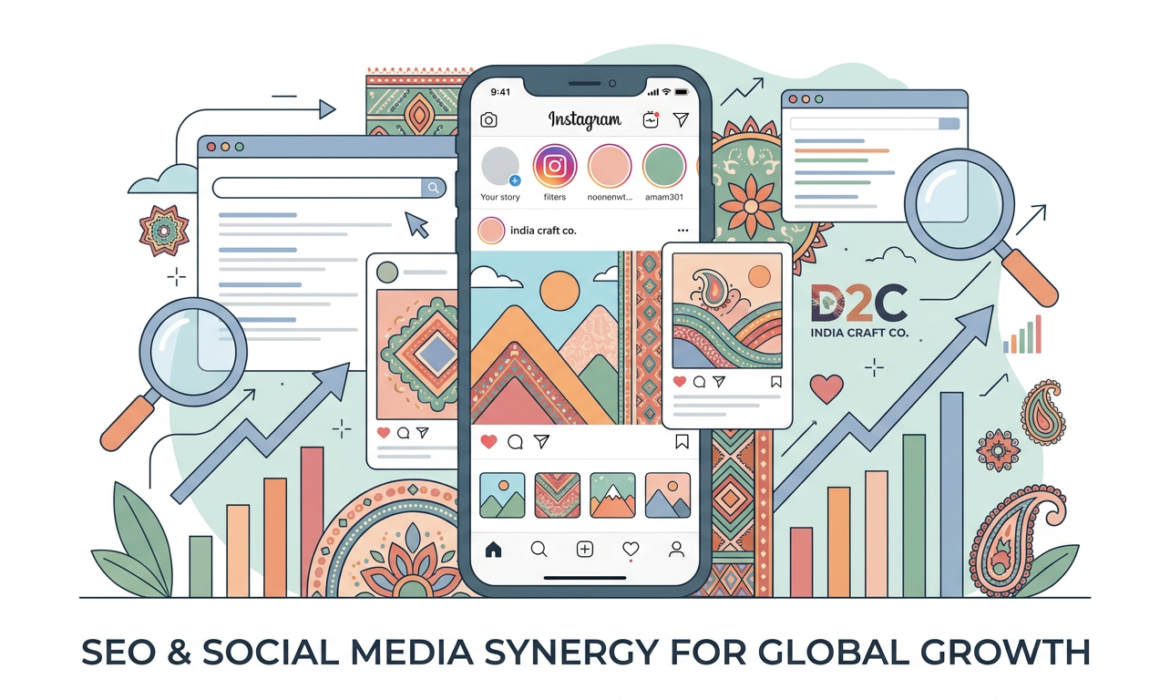
That’s the whole game right there. Instagram plants the seed. Google closes the deal. As one industry observer put it, “search didn’t move to social—social became searchable.” Both matter. But they do completely different jobs. This is where effective seo marketing for small business becomes critical—it’s about meeting customers where they’re actively searching, not just where they’re scrolling.
Real talk: if Meta hiccups tomorrow, what happens to your revenue?
We’ve watched brands lose 60% of their sales in a week because of an ad account suspension or an algorithm shift. No warning. No recourse. SEO doesn’t crash like that. A page that ranks today usually ranks tomorrow. And the month after. That compounding effect is exactly what makes seo for startups such a powerful safety net—you’re building an asset, not renting attention.
Paid social keeps getting more expensive. You already know this. Your CPMs in 2024 weren’t what they are now, and 2026 won’t be kinder.
Organic search traffic? Different math entirely. Once a product page ranks for “vegan protein powder for women,” you’re not paying per click. You’re paying once for the optimization and collecting visitors for years. OPositive’s guide on D2C ecommerce SEO nails it: “the goal isn’t just traffic—it’s traffic that buys.” High-intent search traffic converts. It’s people actively looking for what you sell. Smart seo marketing for small business focuses on exactly this type of high-conversion traffic.
Here’s something wild. Open Google Search Console right now. Look at how many people are searching your brand name. That’s free demand created by your Instagram efforts—and if your site isn’t optimized, you’re handing those clicks to review sites, marketplaces, and competitors bidding on your brand name.
AdRoll’s framework separates branded and non-branded keywords for exactly this reason. Branded search converts at 3-5x the rate of cold traffic. You earned that demand. Don’t leak it.
Most Instagram-first brands have one big problem: their product pages are gorgeous but invisible to Google. Manufacturer copy. No schema. Thin descriptions. Zero internal links.
Fix this, and things change fast. According to Passionfruit’s analysis on D2C SEO ROI, unique, proof-heavy product descriptions outperform generic ones across nearly every metric that matters.
What actually moves the needle on product pages:
Yes, Instagram is becoming a search engine. Blue Wheel Media and JoyByte both make solid cases for optimizing captions, alt text, and Reels for in-app search.
Do it. Absolutely.
But don’t confuse this with replacing website SEO. Instagram search keeps users inside Instagram. Google search sends them to your store with a credit card already in mind. Different intent. Different conversion behavior. Different revenue impact. This distinction is crucial when planning your overall seo marketing for small business strategy.
Your customers aren’t just searching for products. They’re searching for problems. “Why is my hair falling out post-pregnancy.” “How to layer skincare for oily skin.” “Best diet for PCOS.”
These are your future customers. They don’t know your brand yet. SEO content—blog posts, guides, comparison articles—is how you meet them at that exact moment. Instagram can’t do this. The platform doesn’t reward educational depth the way Google does.
Build a content hub, link strategically to relevant products, and you’ve created a discovery engine that works at 3 AM while you sleep. This approach to seo for startups turns your website into a 24/7 sales assistant.
Instagram is brilliant for what it does. It builds brand. It moves product. It makes founders feel like they’ve cracked the code. But it’s one channel on a rented platform, and every D2C brand we’ve worked with that scaled past ₹10 crore did it by adding search to the mix—not by replacing social, but by complementing it.
SEO compounds. Instagram content decays. That’s the core difference. A Reel hits its peak in 48 hours. A well-ranked product page brings in customers for years. Investing in seo for startups and implementing smart seo marketing for small business strategies right now—while your brand has momentum and budget—is how you stop renting attention and start owning your acquisition engine.
If you’re an Instagram-first D2C founder wondering where to start, the team at Clickseek Digital helps brands like yours map search demand, fix product page fundamentals, and build the kind of organic flywheel that doesn’t depend on tomorrow’s algorithm. Your future self—and your CAC—will thank you.
Instagram drives discovery, but most purchase decisions involve a Google check first. SEO captures branded searches (people looking for you specifically), non-branded demand (people looking for what you sell), and assisted conversions you’d otherwise lose to competitors who rank above you. It’s about building a sustainable acquisition channel that doesn’t depend on algorithm changes or rising ad costs.
Typically, you’ll start seeing initial movement in 3-4 months, with meaningful traffic growth between 6-12 months. Branded search improvements can happen faster, sometimes within weeks. Unlike paid ads that stop working when you stop spending, SEO builds momentum over time—each optimized page continues bringing traffic long after the initial work is done.
Instagram SEO optimizes your content for in-app search, keeping users inside the platform. Website SEO brings high-intent searchers directly to your store when they’re ready to buy. Both matter, but they serve different purposes—Instagram builds awareness, while Google SEO captures purchase intent and drives conversions.
Ideally, both. Paid ads give you immediate feedback and sales, while SEO builds long-term equity. If you must choose, start with paid ads to validate product-market fit, then layer in SEO once you have consistent sales. The brands that scale fastest use paid social for quick wins and SEO to reduce dependency on expensive ad channels over time.
The most common mistakes include copying manufacturer descriptions, ignoring technical basics like site speed and mobile optimization, creating content without keyword research, measuring only last-click conversions (which undervalues SEO), and treating SEO as a one-time project instead of an ongoing channel. Most critically, they wait too long to start—by the time CAC becomes painful, they’re 6-12 months behind where they could have been.

Bangalore, India
